

Forklift Warning Systems: How the Linde BlueSpot™ Improves Forklift Safety

07 Mar 2024


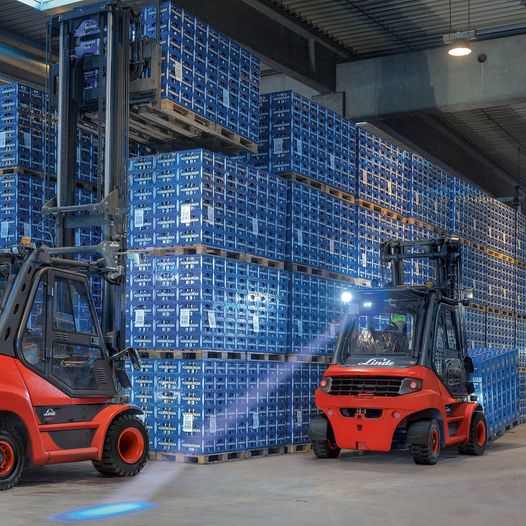
Forklifts and pedestrians share the same floor in most New Zealand warehouses, cool stores and yards. WorkSafe NZ wants forklifts and pedestrians kept apart and good site layout does most of that job, however there is nearly always a blind corner or a doorway where the two still meet. Linde’s BlueSpot is made for those places, projecting a bright blue light onto the floor ahead of the truck so people can see a forklift coming before it reaches them.

Why forklift blind spots are a hazard

Visibility from a loaded forklift is poor. The mast, the chains and the load itself sit right in the operator’s line of sight, which is why operators travel in reverse when a load blocks the view forward. That fixes the problem in front but creates a new one behind. Add in the noise of a working warehouse and a truck can be neither seen nor heard, which is how a pedestrian and a forklift can end up in the same place without either one noticing the other.

Forklift warning systems and the hierarchy of controls

Keeping forklifts and pedestrians physically apart is the strongest control WorkSafe NZ recognises - separate routes, barriers and marked walkways are the first priority. Warning and detection systems come after that, and their job is to cut the risk left over on the parts of a site where trucks and people still have to share space.

Most sites already run a reversing beeper and in a quiet warehouse reverse beepers do the job. The problem starts when the site gets noisy, because loud noise masks warning sounds and once several trucks are working at once the beeping becomes part of the background. Even someone who does hear it only knows that a truck is reversing somewhere nearby, not which truck or which way it is going. A light on the floor tells them both and WorkSafe NZ lists projected floor lights among the technological safety controls that help drivers avoid incidents. It also says businesses should consider whether it is reasonably practicable to retrofit new safety technology to the vehicles they already run.

How the Linde BlueSpot works

Linde’s BlueSpot warning system works by having two LED lights sit on the operator’s overhead guard. These lights throw a blue spot onto the floor several metres ahead of the truck, in whichever direction it is travelling, so the system works the same going forward or in reverse. The lights are bright without dazzling and can shine steadily or flash for extra attention at doorways, aisle crossings and blind corners.

The warning lands on the floor before the truck does, which gives people time to move. A directional version projects a blue arrow rather than a spot, showing which way the truck is heading at crossings with poor sight lines. RedSpot does the same job in red, for sites where blue is already used for other markings or where red shows up better on the floor.

The system is rated IP67, so it handles the dust, water and pressure washing of a food plant or a cool store. The LEDs stand up to shock and vibration and the whole system fits to counterbalance forklifts, reach trucks and narrow aisle trucks already in your fleet with no extra infrastructure

The clip below shows it on a real site. A forklift reverses out of a warehouse row at a blind corner where nobody would see it coming and the BlueSpot lands on the pedestrian walkway behind it. The person walking down that walkway sees the light and stops well before the truck gets there.

Linde’s other safety systems

BlueSpot is one part of a wider Linde safety range. Where BlueSpot puts a plain blue spot on the floor, TruckSpot projects a large red hazard triangle with a forklift symbol inside it onto the floor behind a reversing truck. The spot tells people something is coming. The triangle tells them what is coming and that it is dangerous, and Linde aims it at reversing because that is where it says most forklift injuries happen. The two can be fitted together, with BlueSpot covering forward travel and TruckSpot covering reverse.
Linde also builds safety into how the truck drives. Safety Pilot is designed to prevent tipping on counterbalance forklifts by showing the operator load weight and lift height and warning them when the truck’s status turns critical. Dynamic Mast Control steadies the mast on reach trucks working at height. Between them the lights make a truck easier to see and the driving aids make it harder to use unsafely.

Forklift warning system types compared

System type How it works Strengths Things to watch

Audible alarm / reversing beeper

Sounds a tone when the truck reverses.

Simple, low cost and familiar to everyone on site.

Masked by background noise. Adds to site noise. Does not show which truck is moving or which way.

Projected light (Linde BlueSpot / RedSpot)

Projects a blue or red spot, or an arrow, onto the floor ahead of or behind the truck.

Silent. Warns before the truck arrives and shows its direction of travel. Retrofits with no infrastructure.

A visibility aid, not a substitute for separating people and trucks.

Projected symbol (Linde TruckSpot)

Projects a large warning triangle onto the floor behind a reversing truck.

A triangle reads as a hazard instantly. Strong for reversing risk.

Covers the reversing direction only.

Proximity detection / sensors

Detects people near the truck and alerts the operator. Some systems slow or stop the truck.

Can intervene on its own. Can log near misses.

Higher cost and setup. Needs correct configuration.

Source: Linde Material Handling AU product information (lindemh.com.au). Control categories per WorkSafe NZ, “Managing work site traffic: Good practice guidelines.” 

Where projected warning lights matter most in NZ

Projected lights are most effective in the tight, busy spaces where forklifts and people cannot help but mix. The obvious candidates are cool stores, food plants and distribution centres, where electric forklifts work indoors around people. Narrow aisles and constant movement can leave very little room to get out of the way. Peak season makes all of that harder, and WorkSafe NZ has flagged it as a high-risk time for forklifts when there is more product, less room and more people on site. 

None of this replaces a traffic management plan and a projected light is meant to work alongside one, giving a clear silent warning at the points where people and trucks are most likely to meet.

By implementing and utilising appropriate safety devices like the BlueSpot system on forklifts, your operation can enhance employee satisfaction, reduce downtime due to injuries and improve overall productivity and workflow.

Talk to LDX about forklift safety systems

LDX fits and services Linde safety systems, including BlueSpot, on new trucks and on trucks already in your fleet. We service mixed fleets from 17 branches around New Zealand. Talk to us about the right safety setup for your site.
Contact Us